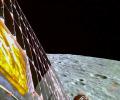
NASA has invited ISRO to join its ambitious Moon Base mission to establish a permanent lunar outpost near the Moon's South Pole, aiming for scientific discoveries and future deep space exploration. This invitation follows discussions at the Civil Space Joint Working Group meeting in Bengaluru, where both nations also advanced cooperation under the Artemis Accords and the TRUST initiative.

NASA has announced three missions to the moon as part of efforts to establish a permanent base on the earth's natural satellite. The USD 20 billion plan includes lunar rovers and drones for experiments to help master skills to live and operate in the dangerous environment.

US Ambassador to India, Sergio Gor, highlighted the evolving US-India space partnership, moving from cooperation to "co-creation" at the Bengaluru Space Expo. He emphasised joint design, funding, and co-authoring the future of human discovery, citing the NISAR satellite and India's participation in the Artemis Accords as key examples of this growing synergy.

Anil Menon, a NASA astronaut of Indian descent, is embarking on an eight-month mission to the International Space Station. A former US Space Force colonel and emergency medicine physician, Menon will conduct vital experiments on the physiological effects of long-duration spaceflight, develop in-space medical technologies, and research semiconductor crystal production, contributing significantly to future deep-space missions and advanced technology.

There is no answer to the question of how IN-SPACe invited EOIs for ISRO's mature rockets and whether it was based on any government policy decision.
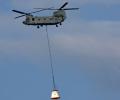
The successful Artemis II mission has boosted confidence in India's upcoming Gaganyaan mission, as both aim to demonstrate similar spaceflight capabilities. Experts highlight the collaboration between ISRO and NASA and the shared training programmes for astronauts.
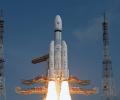
ISRO Chairman V Narayanan has emphasised the critical role of mission operations in ensuring the success of India's expanding space programme. He highlighted this at the Spacecraft Mission Operations conference, noting the importance of sustained teamwork and operational precision, particularly for long-duration missions like Chandrayaan-3 and the upcoming Gaganyaan programme.

From comic-book recreations and Daredevil connections to hints about Silk and the X-Men, here are 15 details you may have missed in Spider-Man: Brand New Day.

'ISRO is planning to build a Bharatiya Antariksh Station by 2030. So, our goal is to create a vehicle that can supply modules to the Bharatiya Antariksh Station and bring the products back.'
If it becomes a reality, the Chennai-based company will become the first private player from India to conduct such a mission to the lunar surface.

Astronaut Shubhanshu Shukla discusses the Gaganyaan mission and its potential to inspire other nations in space exploration, drawing on his experiences as an IAF test pilot and his time on the International Space Station.

The Chandrayaan-2 mission has made the first-ever observation of the effects of the Sun's Coronal Mass Ejection (CME) on the Moon using its onboard scientific instruments. This observation would help understand the lunar exosphere and the impact of space weather on its surface.
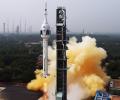
ISRO Chairman V Narayanan announces ambitious space program goals, including landing Indians on the Moon by 2040 and launching the 'Gaganyaan' mission in 2027. The agency is also working on a national space station and uncrewed missions.

Like the best crowd-pleasers, Project Hail Mary makes you laugh, it makes you weep a little, it keeps you riveted and then leaves you with a big smile by the end, notes Mayur Sanap.

Russia's state space corporation, Roskosmos, according to the Reuters report, said it had lost contact with the spacecraft shortly after a problem occurred as it was shunted into pre-landing orbit on Saturday.

Luna-25 took off from the Vostochny launch facility in Russia's Far East, Russia-based TASS news agency reported.

TVF deserves credit for breaking its mould of picking and sticking to favourable and comfortable genres. Space Gen could serve as a launch pad for more exciting content to come, hopes Divya Nair.
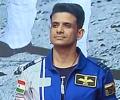
Axiom-4 mission to the International Space Station, piloted by Indian astronaut Group Captain Shubhanshu Shukla with three other crew members, has been delayed and will now be launched from the Kennedy Space Centre in Florida on June 8 at 6:41 pm IST.
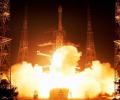
Indian Space Research Organisation is gearing up for one of its busiest times with seven more launches planned this financial year, even as India's first human spaceflight remains scheduled for 2027, its chairman V Narayanan said.
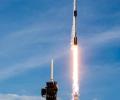
'The solution is to replace, clean up, retest and proceed.' 'There is nothing to worry about if corrected.'

The ISRO on Monday released images of the Lunar far side area captured by the Lander Hazard Detection and Avoidance Camera (LHDAC).

Russia and China are 'seriously' considering a project to install a nuclear reactor on the Moon in the next decade, the official media in Moscow quoted the head of the Russian space corporation as saying.

The agency said it is currently receiving a signal from the lander, which is communicating as expected.

ISRO made efforts to re-establish communication with rover Pragyan and lander Vikram after they were put into sleep mode in September following the onset of night on the moon.

The Human-rated LVM3 vehicle, the Crew Escape System and the Crew Module and Service Module are all in final stages of testing and integration.
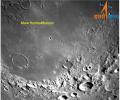
This camera that assists in locating a safe landing area -- without boulders or deep trenches -- during the descent is developed by Ahmedabad-based Space Applications Centre (SAC), a major research and development centre of ISRO.

ISRO Chairman V Narayanan announced the development of a massive rocket capable of placing 75,000 kg payloads in low earth orbit, highlighting India's growing space capabilities and future satellite launches.

The successful launch of the maiden solar mission of the Indian Space Research Organisation came on the heels of the historic lunar landing mission - Chandrayaan-3.
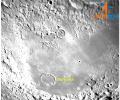
If any factor regarding the lander module appears unfavourable, then the landing will be shifted to August 27, said the Space Applications Centre-ISRO about Chandrayaan-3 on Monday.

The entire process being autonomous when the lander has to fire its engines at the right times and altitudes, use the right amount of fuel, and scan of the lunar surface for any obstacles or hills or craters before finally touching down.
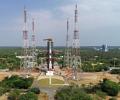
The Aditya-L1 mission carries seven scientific payloads to carry out the study.

After the historic success of its Chandrayaan-3 lunar mission, Indian Space Research Organisation (ISRO) is going full throttle with its plans to send Indian astronauts for the first time to the Moon by 2040, ISRO Chairman S Somanath said.

The images show VELC (Visible Emission Line Coronagraph) and SUIT (Solar Ultraviolet Imager) instruments as seen by the camera on-board Aditya-L1 on September 4, 2023.
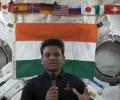
Shukla shared these details in an 18-minute interaction with Prime Minister Narendra Modi on Saturday from the International Space Station that is orbiting the earth at an altitude of 400 km.
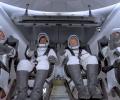
The Lucknow-born Shukla, former NASA astronaut Mission Commander Peggy Whitson, Slawosz Uznanski-Wisniewski of Poland, and Tibor Kapu of Hungary are part of the Axiom-4 mission that marks the return to space for the three nations.

India's Group Captain Shubhanshu Shukla and three other astronauts on Thursday reached the International Space Station as the Dragon spacecraft docked with the orbital laboratory.

XPoSat or X-ray Polarimeter Satellite is India's first dedicated polarimetry mission to study various dynamics of bright astronomical X-ray sources in extreme conditions.

While New Jersey, US-based OrbitBeyond leads a consortium of subcontractors who have designed and developed hardware for deep space missions, Bengaluru-based Team Indus is leading OrbitBeyond's lander engineering, reports T E Narasimhan.
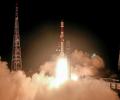
The two Space Docking Experiment (SpaDeX) satellites that the Indian Space Research Organisation is hoping to unite are at a distance of 1.5 km and will be brought much closer on January 11, the space agency said on Friday.

The Vikram Moon Lander, named after the father of India's space mission Vikram Sarabhai on his birth centenary year, is scheduled to touch the lunar surface near its south pole on September 7 about 1.55 am.
